Beyond Revenue: Pinpoint Your Most Profitable Shopify Orders
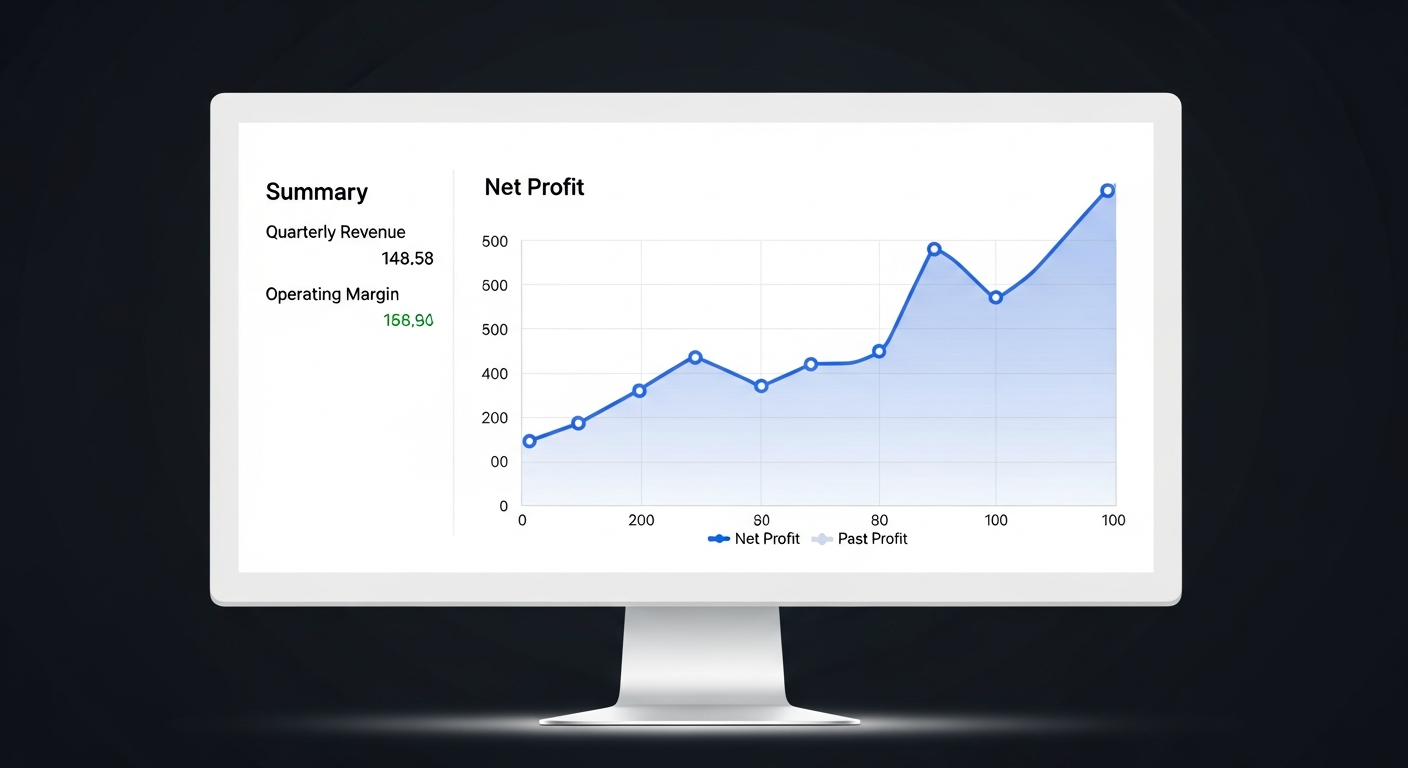
Your Shopify dashboard glows green with surging sales figures. Daily orders are up, revenue charts climb steadily. It feels like success, right? This common scenario paints a picture of growth, a testament to effective marketing and compelling products. Yet, for countless Shopify store owners, these rising revenue numbers can mask a slow, insidious drain on actual profits. Focusing solely on top-line revenue is akin to navigating a ship by looking only at its speed, completely ignoring the leaks in its hull.
The stark reality for many e-commerce businesses is that high revenue does not automatically translate to high profit. You might be processing hundreds, even thousands, of orders each month, but if a significant portion of those orders barely breaks even, or worse, costs you money, your business is on a treadmill to nowhere. Understanding true profitability goes beyond gross sales. It demands a granular view, an ability to dissect each individual order and understand its net contribution to your bottom line. This isn't just about accounting; it's about strategic survival and sustainable growth in a fiercely competitive digital marketplace.
Why Revenue Alone is a Dangerous Metric
The allure of a high revenue figure is powerful. It’s a vanity metric that feels good to report and can attract attention. However, relying solely on revenue for business decisions is fundamentally flawed. It creates a distorted picture of financial health, encouraging strategies that prioritize volume over value and often lead to unsustainable practices. Businesses operating under this illusion often find themselves perpetually busy but perpetually under immense cash flow pressure.
The Hidden Costs That Eat Your Margins
Every single order processed on your Shopify store carries a multitude of costs beyond the obvious product cost. These "hidden" or often overlooked expenses accumulate rapidly, quietly eroding your profit margins until what looked like a healthy sale becomes a financial liability. Ignoring these costs is a common pitfall, leading to mispriced products and misdirected marketing efforts.
Cost of Goods Sold (COGS): This is the most apparent cost, encompassing the direct cost of manufacturing or acquiring the product. But don't forget inbound shipping, customs duties, and any preparation costs.
Shipping and Fulfillment: Beyond the label cost, consider packaging materials, labor for packing, warehouse storage fees, and any third-party fulfillment costs. If you offer "free shipping," this is a direct hit to your margin on every order. Stores often see 10-15% of their gross revenue consumed by these logistics, especially with complex product mixes.
Marketing and Advertising: Every click, every impression, every conversion has a cost. Your Customer Acquisition Cost (CAC) needs to be allocated to the orders it generated. A well-performing ad campaign can still be unprofitable if the CAC exceeds the gross profit of the resulting sales.
Payment Processing Fees: Shopify Payments, PayPal, Stripe, and other gateways all charge a percentage and/or a fixed fee per transaction. These small percentages add up significantly over hundreds or thousands of orders.
Returns and Refunds: This is a major margin killer. The cost of processing a return includes reverse shipping, repackaging, restocking, potential product damage, and the customer service time involved. E-commerce return rates can range from 15-30% depending on the product category, significantly impacting profitability if not properly accounted for.
Customer Service: Every inquiry, every support ticket, every live chat interaction carries a labor cost. While difficult to assign to a single order, excessive support for certain product types or customer segments impacts overall profitability.
Platform Fees and Apps: Your Shopify subscription, along with all the essential apps you rely on for email marketing, reviews, inventory management, and more, are overheads that need to be absorbed by your profitable sales.
These expenses, individually minor, collectively represent a substantial drag on your profitability. Without a clear mechanism to attribute them accurately to each order, you're flying blind, making decisions based on incomplete financial data.
The Illusion of High-Volume, Low-Profit Sales
Chasing sales volume without understanding the underlying profitability of those sales is a dangerous game. It often leads to a scenario where your team is working harder than ever, fulfilling more orders, but the business isn't actually becoming more financially stable. Imagine running a flash sale that generates thousands of orders but only a few cents of profit per item after all costs. Your operational burden skyrockets, your inventory turns over rapidly, but your bank account barely budges.
This illusion can be particularly damaging when it comes to marketing spend. A poorly managed ad campaign, even if it generates sales, can easily push your customer acquisition cost (CAC) above the gross profit margin of those initial orders, turning "growth" into a liability. You might be spending $30 to acquire a customer who places an order with only a $25 gross profit. This isn't growth; it's a slow financial bleed. Sustainable growth stems from profitable sales, not just any sales.
The Imperative of Order-Level Profitability
Moving beyond the superficial glow of revenue figures to the concrete reality of order-level profitability is not merely a best practice; it is a critical necessity for any Shopify store aiming for sustainable growth and long-term success. This shift in focus transforms how you perceive your business, enabling data-driven decisions that directly impact your bottom line.
What is Order-Level Profitability?
Order-level profitability is the precise calculation of the net profit generated by a single customer order after all direct and indirect costs associated with that order have been accounted for. It's not just the selling price minus the cost of the product. It encompasses everything: the product cost, shipping (both inbound and outbound), packaging, payment processing fees, a portion of marketing spend attributed to that sale, any discounts applied, and even the cost of returns if applicable. This granular view allows you to see the true financial impact of every transaction.
Why does it matter so much? Because every decision you make—from product pricing and marketing strategy to inventory management and customer service—has a direct impact on the profitability of individual orders. Without this specific insight, you're making decisions in the dark, hoping for the best rather than strategizing for optimal returns.
Strategic Decisions Fueled by Real Data
When you understand the true profitability of each order, a wealth of strategic opportunities opens up. This data empowers you to make smarter, more impactful business decisions across every facet of your Shopify operation:
Optimized Product Pricing: Identify products that consistently yield high profits versus those that are margin-killers. This insight allows you to adjust pricing strategically, bundle products effectively, or even discontinue underperforming items.
Smarter Marketing Spend: Pinpoint which marketing channels, campaigns, or even specific ads are driving truly profitable sales, not just high-volume sales. Redirect your budget to campaigns with a positive Return on Ad Spend (ROAS) at the *profit* level, not just revenue. You can even identify profitable customer segments and tailor offers specifically for them.
Efficient Inventory Management: Prioritize stocking high-profit items, ensuring you never run out of your most valuable products. Reduce inventory for low-profit or loss-making items, freeing up capital and warehouse space.
Improved Customer Segmentation: Understand which customer demographics or purchasing behaviors are associated with your most profitable orders. This enables targeted retention strategies for your most valuable customers and informed acquisition strategies for similar profiles.
Negotiation Power: With a clear understanding of your costs, you can negotiate better rates with suppliers, shipping carriers, and fulfillment partners. You’ll know exactly how much margin you have to play with.
Discount Strategy: Stop offering blanket discounts that erode profits. Instead, apply targeted promotions to specific products or customer segments where you know the underlying profitability can absorb the reduction, or use discounts to move genuinely unprofitable stock.
This shift from revenue-centric to profit-centric thinking is the hallmark of a mature, data-driven e-commerce business. It allows you to move from reactive decision-making to proactive, strategic planning that directly contributes to sustainable growth.
How to Calculate True Profit Per Order
The concept of calculating true profit per order seems straightforward: Revenue minus all costs. However, the devil is truly in the details. Accurately attributing every relevant cost to a specific order is where the complexity lies. It requires a meticulous approach and access to consolidated financial data.
The Core Formula: Revenue - All Costs
At its heart, the formula for true profit per order is simple:
Net Profit Per Order = (Order Revenue - Discounts) - (COGS + Shipping Costs + Payment Processing Fees + Allocated Marketing Costs + Returns Costs + Other Transactional Overheads)
Let's break down the "All Costs" component for a clearer picture:
Order Revenue: The total amount the customer paid for the products in that specific order.
Discounts: Any promotional discounts, coupon codes, or loyalty rewards applied to that order directly reduce your revenue.
Cost of Goods Sold (COGS) for that order: The direct cost of each item sold in that particular order. If an order has multiple products, you sum their individual COGS.
Shipping Costs: The actual cost you incurred to ship that specific order to the customer, including packaging materials. If you offer free shipping, this cost is fully absorbed by your business.
Payment Processing Fees: The exact fees charged by your payment gateway for that specific transaction.
Allocated Marketing Costs: This is often the trickiest part. You need a method to attribute a portion of your overall marketing spend to individual orders. This could be based on the Customer Acquisition Cost (CAC) for the channel that drove the sale, or a more granular attribution model if you have one. For example, if your average CAC for a specific ad campaign is $20, you might allocate $20 to each order generated by that campaign.
Returns Costs (if applicable): If an order results in a return, the costs associated with that return (reverse logistics, restocking, potential loss of product) must be factored in, potentially making the order unprofitable in hindsight.
Other Transactional Overheads: This might include a small allocated portion of your Shopify app costs, customer service time specifically for that order, or other direct operational expenses.
The Manual Method: A Labor-Intensive Endeavor (and its pitfalls)
For small stores with very few orders, calculating profit per order manually might seem feasible. It involves exporting order data from Shopify, pulling shipping costs from your carrier accounts, extracting payment processing fees from your financial statements, cross-referencing COGS from your inventory system, and trying to allocate marketing spend from your ad platforms. This process typically involves a convoluted spreadsheet with numerous tabs and complex formulas.
However, this manual approach quickly becomes an unsustainable, error-prone nightmare as your order volume grows. Imagine:
Time Consumption: Dedicating hours, if not days, each week or month to consolidate disparate data points. This is time you could be spending on growth strategies, product development, or customer engagement.
Data Silos: Information is scattered across Shopify, shipping providers, ad platforms, payment processors, and your accounting software. Merging these manually is a recipe for inconsistencies.
Human Error: A single misplaced decimal, an incorrect formula, or a forgotten cost element can skew your entire profitability picture. The larger the dataset, the higher the probability of mistakes.
Lack of Real-time Insight: Manual calculations are inherently retrospective. By the time you’ve crunched the numbers, the data is already old, limiting your ability to react quickly to trends or issues. You can't make agile business decisions with stale information.
Incomplete Cost Attribution: Accurately allocating indirect costs like marketing spend or customer service time to individual orders is incredibly challenging to do manually and often leads to oversimplification or omission.
The manual method, while seemingly free of upfront software costs, carries a tremendous hidden cost in terms of time, accuracy, and lost opportunity. It prevents you from truly understanding your business's financial pulse in real-time.
Actionable Strategies to Boost Your Shopify Order Profitability
Understanding your order-level profitability isn't just an academic exercise; it's a launchpad for strategic action. Once you know precisely where your profits are coming from, and where they are being eroded, you can implement targeted strategies to enhance your overall financial performance. These aren't generic tips; they're direct responses to the insights gained from granular profit analysis.
Optimize Your Product Mix
Not all products are created equal in terms of profitability. Your profit-per-order data will clearly highlight your star performers and your lagging liabilities. Armed with this knowledge, you can:
Prioritize High-Margin Products: Feature these items more prominently on your homepage, in email campaigns, and within your ad creatives. Push bundles that include high-margin items.
Re-evaluate Low-Margin Products: For products consistently showing low or negative profit, consider increasing their price, negotiating better supplier rates, or finding ways to reduce associated costs (e.g., cheaper packaging, alternative shipping methods). If none of these are viable, consider phasing them out or using them as loss leaders only in very specific, strategic contexts to drive traffic to higher-profit items.
Strategic Bundling: Combine a lower-profit item with a higher-profit item to increase the overall profitability of the order. This can also increase average order value (AOV).
Refine Your Marketing Spend
Your marketing budget is often one of your largest expenses. Optimizing it based on profit, not just revenue, is crucial.
Target Profitable Customer Segments: Use your profit data to identify the demographics, interests, or behaviors of customers who consistently place high-profit orders. Direct your ad spend and content creation efforts towards attracting more of these valuable customers.
Analyze Campaign Profitability: Go beyond ROAS (Return on Ad Spend) and calculate POAS (Profit on Ad Spend). A campaign might have a high ROAS but still be unprofitable if the products sold have very thin margins and high associated costs. Shift budget from campaigns that generate high revenue but low profit to those that deliver robust bottom-line contributions.
Optimize Ad Creatives and Landing Pages: Ensure your marketing efforts are attracting customers who are more likely to complete a purchase, have a higher AOV, and require less customer support, thus contributing to higher order profitability.
Streamline Fulfillment and Shipping
Shipping and fulfillment costs are notorious for eating into margins. Proactive management can yield significant savings.
Negotiate Better Rates: With data on your shipping volume and costs per order, you're in a stronger position to negotiate better rates with your carriers. Explore regional carriers or consolidated shipping options.
Optimize Packaging: Reduce package size and weight where possible without compromising product safety. Even a few ounces or cubic inches can impact shipping costs, especially for high-volume items. Use eco-friendly and cost-effective materials.
Strategic Warehouse Placement: If you use multiple fulfillment centers, ensure orders are routed to the closest warehouse to minimize shipping zones and costs.
Transparent Shipping Policies: Clearly communicate shipping costs to customers upfront. Consider offering tiered shipping options where customers can choose between slower, cheaper options and faster, more expensive ones, allowing them to absorb some of the cost.
Master Your Returns Process
Returns are an unavoidable part of e-commerce, but their impact on profitability can be mitigated.
Reduce Return Rates: Improve product descriptions, use high-quality images and videos, provide accurate sizing guides, and offer customer reviews to help buyers make informed decisions, reducing the likelihood of returns due to misrepresentation or poor fit.
Efficient Return Logistics: Streamline the process for handling returns. Faster processing means products can be restocked and resold quicker, minimizing lost sales opportunities. Automate return label generation and tracking.
Analyze Return Reasons: Categorize return reasons. If a specific product consistently gets returned for the same reason (e.g., "damaged in transit," "not as described"), it indicates a deeper issue with your product quality, packaging, or description that needs addressing.
Dynamic Pricing and Discounting
Avoid the trap of simply slashing prices to drive sales. Use discounts strategically and intelligently.
Targeted Discounts: Instead of blanket sales, offer discounts on specific products you know have healthy margins, or to specific customer segments (e.g., first-time buyers, loyal customers) to encourage repeat purchases.
Threshold Discounts: Encourage higher Average Order Value (AOV) by offering discounts only above a certain spend threshold, ensuring the increase in order value compensates for the discount.
Clearance for Unprofitable Stock: Use discounts to clear out genuinely unprofitable or slow-moving inventory that is costing you in storage fees, rather than letting it sit and accrue further costs. Understand the absolute lowest price you can sell it for without incurring a greater loss.
The Future of Profit Management for Shopify Stores
The manual calculation of profit per order is not only impractical but also fundamentally limits your business's potential. In today's fast-paced e-commerce environment, rapid, accurate, and actionable financial insights are not a luxury; they are a competitive imperative. Businesses that can quickly identify their most profitable products, customers, and marketing channels are the ones that will thrive.
The solution lies in automation and specialized tools designed to integrate with your Shopify store and consolidate all your disparate cost data. These platforms take the painstaking manual labor out of profit calculation, providing real-time dashboards and reports that illuminate your true financial performance down to the individual order. They transform complex data into clear, digestible insights, allowing you to focus on strategy rather than spreadsheets. This empowers you to make proactive, data-driven decisions that directly impact your bottom line, moving beyond guesswork to precise, profitable action.
Embracing a dedicated profit analytics solution means gaining unparalleled clarity into your operations. It means understanding which products truly drive your success, which marketing efforts yield the highest returns, and where inefficiencies are silently eroding your hard-earned revenue. This isn't just about saving time; it's about unlocking growth potential you didn't even realize existed.
Start Tracking Your Real Profits with ProfitPilot Today
Are you tired of guessing which orders are actually making you money? Stop relying on incomplete data and gain crystal-clear visibility into your Shopify store's true profitability. ProfitPilot seamlessly integrates with your Shopify account, pulling in all your sales, cost of goods, shipping fees, marketing spend, and payment processing fees to give you an accurate, real-time profit margin for every single order.
Uncover your most profitable products, optimize your ad spend, and make smarter inventory decisions with actionable insights delivered straight to your dashboard. Don't let hidden costs erode your hard work any longer. Take control of your financial future and build a truly profitable e-commerce business.